Grab n Go
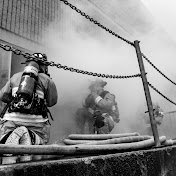
The Grab n Go hose pull is used primarily for unobstructed, direct hose lays. These are straight pulls without anything in the way between you and the point of entry. One of the main benefits of the Grab n Go is that the hose pays out as you move towards the target and is the reason we load our crosslays the way we do. To perform the Grab n Go, start by pulling the crosslay down far enough so the two big loops are accessible and you can grab the nozzle. Take the nozzle and wrap it around your collar. Then, with the right hand, reach through the first big loop and grab the second one. Make sure the first big loop sits in the crook of your elbow and hold the second loop in your hand. The loop in your hand is designed to pull the entire stack out of the hose bed. As you move away from the rig and towards your target, announce “clear traffic, clear hose.” Continuing towards the target, the loop in your hand will pull tight as all the slack is pulled out. When it does, look back and make sure you see the coupling attached to the whip coming out of the crosslay bed. If you see it, you can drop that loop and continue on. If you don’t see it, it is probably hung up in the bed still and you’ll need to clear it before continuing. Once you’re certain the hose bed is clear, announce “hose bed clear”, drop the loop and continue towards the target. When you feel tension on the second big loop on your elbow, you know you’ve extended the entire line. All that is left to do is to flake out any hose that is needed, perform your nozzle checks and call for water. If you’re pulling the 200’ #3 crosslay though, there is one significant difference that you'll need to be aware of. Whereas the #2 crosslay is loaded so that the first bog loop clears the hose bed and the second one gets the 50’ coupling up with the nozzle, the #3 crosslay is loaded so that the second big loop gets the 100’ coupling up with the nozzle instead. So, after the second loop pulls tight, drop it and flake out any hose that needs it and then find the 50’ coupling and bring it up to the nozzle. Perform nozzle checks and call for water.
Download
1 formatsVideo Formats
Right-click 'Download' and select 'Save Link As' if the file opens in a new tab.