Harry Clarke
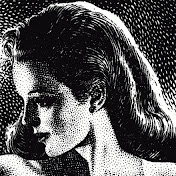
Harry Clarke (17 March 1889 – 6 January 1931) was an Irish stained-glass artist and book illustrator. Born in Dublin, he was a leading figure in the Irish Arts and Crafts Movement. Henry Patrick (Harry) Clarke was born 17 March 1889, younger son and third child of Joshua and Brigid Clarke (née MacGonigal).Church decorator Joshua Clarke moved to Dublin from Leeds in 1877 and started a decorating business Joshua Clarke & Sons, which later incorporated a stained glass division. Through his work with his father, Clarke was exposed to many schools of art but Art Nouveau in particular. Clarke was schooled at Model Schools, Marlborough St. and subsequently Belvedere College, although he left that college in 1905 following the death of his mother in 1903.Clarke was then apprenticed into his father's studio, whilst also attending evening classes in the Dublin Art School. It was during this time that his The Consecration of St Mel, Bishop of Longford, by St Patrick won the gold medal for stained glass work in the 1910 Board of Education National Competition. Whilst studying at the Dublin Art School, Clarke met fellow artist and teacher Margaret Crilley. They married on 31 October 1914 and moved into a flat at 33 North Frederick Street, and went on to have three children, Michael, David and Ann. Having completing his education, Clarke moved to London, where he sought employment as a book illustrator. Picked up by London publisher Harrap, he started with two commissions which were never completed: Samuel Taylor Coleridge's The Rime of the Ancient Mariner (his work on which was destroyed during the 1916 Easter Rising) and an illustrated edition of Alexander Pope's The Rape of the Lock. Difficulties with these projects made Hans Christian Andersen's Fairy Tales by Hans Christian Andersen his first printed work, however, in 1916—a title that included 16 colour plates and more than 24 halftone illustrations. This was closely followed by an illustrations for an edition of Edgar Allan Poe's Tales of Mystery and Imagination: the first version of that title was restricted to halftone illustrations, while a second iteration with eight colour plates and more than 24 halftone images was published in 1923. The latter of these made his reputation as a book illustrator, and this was during the golden age of gift-book illustration in the first quarter of the twentieth century: Clarke's work can be compared to that of Aubrey Beardsley, Kay Nielsen, and Edmund Dulac. It was followed by editions of The Years at the Spring, containing 12 colour plates and more than 14 monotone images; (Lettice D'O. Walters, ed., 1920), Charles Perrault's Fairy Tales of Perrault, and Goethe's Faust, containing eight colour plates and more than 70 halftone and duotone images (New York: Hartsdale House,1925). The last of these is perhaps his most famous work, and prefigures the disturbing imagery of 1960s psychedelia. Two of his most sought-after titles include promotional booklets for Jameson Irish Whiskey: A History of a Great House (1924, and subsequent reprints) and Elixir of Life (1925), which was written by Geofrey Warren. His final book, Selected Poems of Algernon Charles Swinburne, was published in 1928. Both Harry and his brother Walter were plagued with ill health, in particular problems with their lungs. Clarke had been diagnosed with tuberculosis in 1929, and had begun to spend time in a sanatorium in Davos, Switzerland. With his health continuing to decline, and fearing that he would die in a foreign country, Clarke began his journey back to Dublin in 1931. Clarke died on this journey on 6 January 1931 in Chur, where he was buried. [from Wikipedia] Music by Robert Rich
Download
0 formatsNo download links available.