Leak testing types | Pressure decay testing
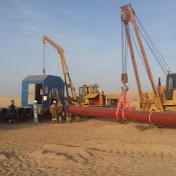
Leak testing types | Pressure decay testing **Pressure Decay Testing** is a widely used, non-destructive method for detecting leaks in sealed systems or components by monitoring changes in pressure over time. It is a simple, cost-effective, and reliable technique suitable for applications where high sensitivity is not the primary requirement. --- ### **How It Works:** 1. **System Sealing and Pressurization**: - The system or component being tested is sealed and pressurized using a test gas, typically air or nitrogen. The pressure level is predetermined based on the specifications and application. 2. **Stabilization Phase**: - Once the system is pressurized, a short stabilization period allows the gas temperature and pressure to equalize and ensures that no external influences, such as thermal expansion, affect the test results. 3. **Measurement Phase**: - After stabilization, the system is isolated from the pressure source, and the pressure inside the system is monitored for a specified period. - A sensitive pressure sensor measures any pressure drop that occurs during this time. 4. **Leak Detection**: - A pressure drop indicates a potential leak. The rate of pressure decay is used to determine the size and severity of the leak. --- ### **Key Metrics**: - **Initial Pressure (P₁)**: The pressure at the start of the measurement phase. - **Final Pressure (P₂)**: The pressure at the end of the measurement phase. - **Decay Rate**: The rate at which the pressure drops, often used to calculate the leak rate. Leak rates are typically expressed in units such as mbar∙L/s or cc/min. --- ### **Advantages**: - **Simplicity**: Requires minimal equipment and is easy to perform. - **Non-Destructive**: The tested component is not damaged during testing. - **Cost-Effective**: Does not require expensive tracer gases or complex detection systems. - **Versatile**: Suitable for testing a wide range of components and systems. --- ### **Limitations**: - **Lower Sensitivity**: Compared to other methods like helium leak testing, pressure decay testing has limited sensitivity for very small leaks. - **Environmental Factors**: Changes in temperature or external pressure can affect test results, requiring careful control and calibration. - **Test Duration**: May require longer testing times for very low-leak specifications. --- ### **Applications**: - **Automotive**: Testing seals in fuel systems, radiators, and air conditioning components. - **Medical Devices**: Ensuring airtight seals in syringes, vials, and packaging. - **HVAC Systems**: Verifying the integrity of ducts, pipes, and valves. - **Consumer Goods**: Ensuring the quality of packaging, such as beverage cans and food containers. --- ### **Variants**: 1. **Dry Air Test**: Uses air as the test medium, suitable for general applications. 2. **Underwater Test**: Submerges the test object in water to visually detect bubbles in the case of leaks, complementing pressure decay testing for larger leaks. --- In summary, **Pressure Decay Testing** is an effective, straightforward leak detection method ideal for many industrial and commercial applications, offering reliability and ease of use for moderate leak sensitivity requirements.
Download
0 formatsNo download links available.