Patterns in Errors: Examples from Pulsar Timing - Scientific Critical Thinking
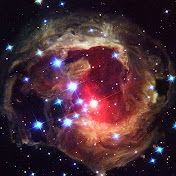
Different sources of systematic error will affect data in different ways. If we can model the behavior of these sources of errors, we can filter out how they affected our data and even use those measurement "errors" as a tool for studying the sources of those errors. We use examples from the field of pulsar timing to see how we can turn a source of error into a tool of discovery. References: NANOGrav Collaboration: Science with the Next-Generation VLA and Pulsar Timing Arrays: https://arxiv.org/abs/1810.06594 NANOGrav Nine-Year Data Set: https://iopscience.iop.org/article/10.1088/0004-637X/813/1/65 Champion et al, Measuring the mass of solar system planets using pulsar timing: https://iopscience.iop.org/article/10.1088/2041-8205/720/2/L201 Jodrell Bank Observatory: https://www.jb.man.ac.uk/distance/frontiers/pulsars/section4.html NANOGrav, Characterizing DM Events in the Interstellar Medium: https://nanograv.org/sites/default/files/2022-10/NANOGrav-Memo-002.pdf Cromartie et al, Relativistic Shapiro delay measurements of an extremely massive millisecond pulsar: https://arxiv.org/abs/1904.06759 Full Series Playlist: https://www.youtube.com/playlist?list=PLQzpF6G7qUZCP4cN3eNI4CTnDhNFo6740 0:00 Introduction 2:38 Basics of pulsar timing 7:09 Random noise in pulsar signals 13:09 Systematic errors from motions in solar system 19:18 Systematic errors from interstellar medium 22:48 Systematic errors from Shapiro delay (warped spacetimes) 27:09 Summary of correcting for systematic errors 28:57 The dangers of overcorrecting Opening Image Credit: NASA, ESA, CSA, Brant Robertson (UC Santa Cruz), Ben Johnson (CfA), Sandro Tacchella (Cambridge), Marcia Rieke (University of Arizona), Daniel Eisenstein (CfA) https://webbtelescope.org/contents/media/images/2023/127/01H1Q1CGJD51CDJTK2NHJWD06M
Download
0 formatsNo download links available.