Raglan Road
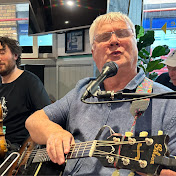
Patrick Kavanagh’s “Raglan Road” stands today as one of the defining songs of Irish literary and musical culture — a rare work in which modern poetry and traditional melody merge so naturally that many listeners assume it has always existed in oral tradition. The song began life not as a folk lyric, but as a deeply personal poem written by the Monaghan poet whose unrequited love for the young medical student Hilda Moriarty inspired some of the finest romantic writing in twentieth-century Ireland. During the early 1940s, Kavanagh was living in Dublin and frequently encountered Moriarty near Raglan Road in Ballsbridge. He was already in his forties; she was in her early twenties. Their friendship stirred in him an intense emotional attachment which she did not fully return. From that disappointment came a poem of extraordinary restraint and beauty — not bitter, but sorrowful, reflective, and painfully aware of the dangers of confusing earthly love with artistic idealism. The poem first appeared in The Irish Press in 1946 under the title “Dark-haired Miriam Ran Away.” Kavanagh later adapted it to the traditional Irish air “Fáinne Geal an Lae” (“The Dawning of the Day”), one of the great old melodies of Ireland. "The Dawning of the Day" refers primarily to a traditional 17th-century Irish air, which later became famous as the melody for Patrick Kavanagh’s poem. The song’s greatest champion became Luke Kelly of The Dubliners. Legend tells that Kavanagh met Kelly in Dublin’s Bailey pub and urged him to sing it. Kelly’s monumental recording — passionate, direct, and emotionally unguarded — helped elevate “Raglan Road” into the modern folk canon. Other distinguished interpretations have since come from Van Morrison with The Chieftains, Sinéad O’Connor, Mark Knopfler, and Joan Osborne. This arrangement returns the song to a more intimate traditional setting, led by Uilleann pipes, accordion, fiddle, and acoustic guitar. Those instruments suit the lyric’s emotional landscape perfectly: the quiet dignity of remembered love, the ache of missed possibility, and the bittersweet understanding that great beauty often arrives hand-in-hand with loss. The song is still under the copyright ownership of Patrick Kavanagh.
Download
0 formatsNo download links available.