Sewing Machine Tension Issues - Thread Looping Underneath - Part 1
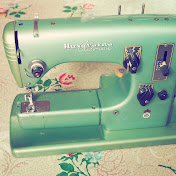
If you are seeing looping of thread on the underside of the sewn seam then more than likely there's a problem with the top tension. This issue applies to almost all sewing machine types and I am demonstrating this on the classic Elna Air Electronic in this case. It can seem strange that the problem on the bottom is caused by top thread tension but it is nearly always the case. Generally it is an indication that the top thread is too loose. This video shows that even though the top tension is set in the normal zone, there can be an issue with the tension being too loose. There are several causes of this problem but in this case it is caused by lint and dust caught in between the tension disks. The way a tension assembly works is to provide consistent thread tension by clamping the thread between metal disks. Contaminants such as lint, dust or general grime in between the disks can cause them to be held open, therefore the thread is no longer being clamped properly by the disks. This can cause loose or inconsistent tension. Another thing to check is that the tension release mechanism is functioning correctly. When working correctly, the mechanism should only release the thread tension when the presser foot is lifted, therefore allowing the thread to be pulled freely through the tension disks and allowing the fabric to be easily removed from the machine. If incorrectly set, the release mechanism can be holding the disks open slightly or it may not open the disks when the presser foot is lifted. I show how to carry out a quick clean and if that doesn't help I show how to remove the top cover on the Elna Air Electronic sewing machine to gain access to the tension assembly for a deeper clean and how to check the tension release mechanism. Once the tension disks have had a quick clean, the lid can be temporarily installed and tension tested. If the quick clean does not work, you may need to do a deep clean as I will cover in another video. Tension calibration can be done by attaching a 140g weight to the top thread of size 50/3. At tension setting 4.5 the thread should pull slowly through the tension disks and at 5.5 it should stop. I show how a weight can be made up by weighing some various pieces of cutlery in a bag to attain the 140g weight required. Attach the bag to the thread and you have yourself a home made thread calibration weight. Once you're happy that your machine's top tension is performing as it should, the lid and handle can be reinstalled. Find part 2 here - https://youtu.be/3x0J7M9ukro Index: 0:00 - Introduction 1:20 - Check tension by feel 4:14 - A quick clean of tension disks 7:00 - Removing the lid and carry handle 8:28 - Inspecting the tension assembly 9:04 - Explaining the tension release mechanism 13:12 - A basic clean of the tension disks 18:30 - Assembly and reinstalling the lid and carry handle 21:09 - Tension calibration by using a weight attached to the thread 25:02 - Testing 25:40 - Conclusion www.institches.co.nz www.patreon.com/sewingmachines
Download
0 formatsNo download links available.