The Periodic Table (Rapping the elements!)
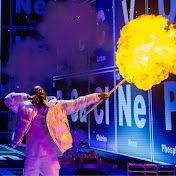
Tweet@Oortkuiper. Lyrics below Many people have heard of Tom Lehrer's 'The Elements' song. One day I decided to search for it online to memorise some stuff about the elements and found out that Daniel 'Harry Potter' Radcliffe had recently recited it on TV. I wondered what he (and the viewers) might have learnt about the elements by listening to it but shock horror...after listening I realised the song hadn't actually told me anything about The Periodic Table, except what's on it! So I wrote my own. The chorus contains the first 36 elements in order up to Krypton. The first verse covers general info about the Periodic table. The second verse lists the Alkali Metals and The Alkaline Earth Metals. The third verse lists the Halogens and the Noble Gases. Let me know if this rap helps you at all. Out of interest, if you manage to memorise the chorus, how long did it take? Good luck O.K Lyrics: Hydrogen, Helium Then Lithium, Beryllium, Boron, Carbon, Nitrogen, Oxygen, Fluorine & Neon Then Sodium, Magnesium, Aluminium, Silicon & Phosphorus & Sulphur & Chlorine & Argon And then Potassium, Calcium; Scandium, Titanium, Vanadium, Chromium, Manganese precedes the Iron, Cobalt, Nickel, Copper, Zinc, Gallium & Germanium, Arsenic & Selenium, Bromine, 36 Krypton Every element can be recognized by its PROTONS And chemistry is basically the swapping of ELECTRONS The number in the OUTER SHELL determines the reactions That are able to occur within atomic interactions Elements reside in the s, p, d and the f blocks Like if this table was a garden these would be plots Containing groups that give order to all the atoms we have got Like on the left there are metals, and on the right there are not The metals are good at conducting heat and electricity But non-metals are not and usually have lower densities But in between the two opposing chemical families Are the METALLOID ELEMENTS that exhibit both qualities TRANSITION METALS are from group three up to eleven In the d block where one third of all elements are dwelling And the period they rest in can allow us to determine How many ORBITAL SHELLS the electrons are utilizing Hydrogen, Helium Then Lithium, Beryllium, Boron, Carbon, Nitrogen, Oxygen, Fluorine & Neon Then Sodium, Magnesium, Aluminium, Silicon & Phosphorus & Sulphur & Chlorine & Argon And then Potassium, Calcium; Scandium, Titanium, Vanadium, Chromium, Manganese precedes the Iron, Cobalt, Nickel, Copper, Zinc, Gallium & Germanium, Arsenic & Selenium, Bromine, 36 Krypton I'm hooked on elements of The Periodic Table And the first group is the most reactive, ALKALI METALS There's Lithium that we use in the batteries Then Sodium that actually's the filament in street lights And naturally Potassium is used in fertilizer Rubidium gives a purple flame the second thing discovered with a SPECTROSCOPE By Bunsen and Kirchoff but first off they found Caesium But the last of the alkali metals is labelled Francium Now if you're managing to tackle my verse Let us wrestle group two with the ALKALINE EARTH METALS First is Beryllium and it's rare in the Universe But if you burn Magnesium its blinding to observe And there's Calcium the most present metal in many animals Then Strontium that's too reactive to be found in natural forms And that's the norm for the even denser Barium Beware radiation coming from Marie Curie's Radium! Hydrogen, Helium Then Lithium, Beryllium, Boron, Carbon, Nitrogen, Oxygen, Fluorine & Neon Then Sodium, Magnesium, Aluminium, Silicon & Phosphorus & Sulphur & Chlorine & Argon And then Potassium, Calcium; Scandium, Titanium, Vanadium, Chromium, Manganese precedes the Iron, Cobalt, Nickel, Copper, Zinc, Gallium & Germanium, Arsenic & Selenium, Bromine, 36 Krypton So switch on the lights and you might see I'm back again Tackling the group 17's called the HALOGENS The NON-METAL ELEMENTS the first on is Fluorine As a compound for your teeth it's in government juice like Chlorine That's used to raise the hygiene of your water supply While Bromine retards flames if correctly applied And in food and disinfectants you'll find Iodine But heavy Halogen Astatine is the rarest one to find Now it's time for group 18, the gases called NOBLE They're really UNREACTIVE so these elements are stable Helium's the second lightest on this Periodic Table And the next one is the gas that gives the Neon lights their label And Argon is the third most present gas found in our atmosphere With Krypton and Xenon they're found in light sources everywhere But the one to fear is the radioactive Radon Giving off energy like Johnny Storm with the flame on! Hydrogen, Helium Then Lithium, Beryllium, Boron, Carbon, Nitrogen, Oxygen, Fluorine & Neon Then Sodium, Magnesium, Aluminium, Silicon & Phosphorus & Sulphur & Chlorine & Argon And then Potassium, Calcium; Scandium, Titanium, Vanadium, Chromium, Manganese precedes the Iron, Cobalt, Nickel, Copper, Zinc, Gallium & Germanium, Arsenic & Selenium, Bromine, 36 Krypton
Download
0 formatsNo download links available.