Things you didn't know you didn't know: physiological complexity
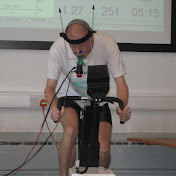
In this video, I introduce you to the concept of complexity and how it is used to analyse and interpret physiological time series, such as heart rate and muscle force or torque output. References to some of the studies used below can be found here: Mandebrot set: Created by Wolfgang Beyer with the program Ultra Fractal 3. - Own work, CC BY-SA 3.0, https://commons.wikimedia.org/w/index.php?curid=321973 Double pendulum model: Created by Ari Rubinsztejn - Own work, CC BY-SA 4.0, https://commons.wikimedia.org/w/index.php?curid=75448143 Lipsitz and Goldberger (1992): https://pubmed.ncbi.nlm.nih.gov/1482430/ Gisiger (2001): https://pubmed.ncbi.nlm.nih.gov/11396846/ Macklem (2008): https://journals.physiology.org/doi/full/10.1152/japplphysiol.00942.2007 Pethick et al. (2015): https://physoc.onlinelibrary.wiley.com/doi/full/10.1113/jphysiol.2015.284380 Pethick et al. (2016): https://journals.physiology.org/doi/full/10.1152/ajpregu.00019.2016 Pethick et al. (2018): https://physoc.onlinelibrary.wiley.com/doi/10.1113/EP086960 Pethick et al. (2018): https://journals.lww.com/acsm-msse/Fulltext/2018/02000/Caffeine_Ingestion_Attenuates_Fatigue_induced_Loss.8.aspx
Download
0 formatsNo download links available.