Traditional Logic
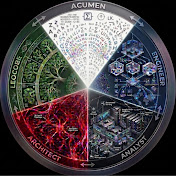
The Foundations of Traditional LogicTraditional logic, rooted in the teachings of Aristotle and refined by medieval schoolmen, serves as the historical "grammar" of Western thought. Unlike modern symbolic systems that rely on algebraic notation, this classical approach analyzes arguments primarily through the relationship between classes or categories of things. It operates on the belief that human reasoning can be distilled into a few reliable patterns, primarily by examining how attributes are affirmed or denied of subjects. By focusing on the "Categorical" nature of statements, traditional logic provides a framework for evaluating the basic architecture of any claim to knowledge, ensuring that the movement from evidence to conclusion follows a disciplined path. The Fourfold Architecture of Propositions At the heart of this system is a fourfold distinction based on Quantity and Quality. Every statement is classified as either Universal (referring to an entire class) or Particular (referring to an indefinite portion of a class), and as either Affirmative or Negative. This yields the four standard categorical forms: A (All S is P), E (No S is P), I (Some S is P), and O (Some S is not P). While these forms seem simple, they create a rigorous grid for thought. To fully operationalize this, one must account for the Square of Opposition, an absent component in basic descriptions that maps the specific conflicts between these forms—such as how a "Universal Affirmative" ($A$) is the direct contradictory of a "Particular Negative" ($O$).The Mechanics of the Syllogism The primary tool of traditional logic is the syllogism, a three-part argument consisting of two premises and a conclusion. These arguments are built using "Logical Particles" like all, some, and no, which act as quantifiers to define the scope of the claim. A valid categorical syllogism successfully bridges two disparate terms through a "Middle Term" that appears in both premises but vanishes in the conclusion. Beyond simple categories, traditional logic also recognizes Hypothetical (if-then) and Disjunctive (either-or) forms. However, to judge the validity of these structures, one requires further technical rules often left unstated, such as the Rules of Distribution, which ensure that terms are applied to their entire class at the correct moment in the argument. The Limits and Normative Authority While traditional logic is incredibly effective for classificatory sciences and everyday debate, it is essentially a normative discipline rather than a descriptive one. It does not attempt to describe how the human mind actually wanders or feels; instead, it prescribes how a mind must move if it wishes to remain consistent. This creates a "Theory of Inquiry" where the validity of an argument is entirely independent of whether the premises are factually true in the world. By stripping an argument down to its Figure and Mood—the specific arrangement of its A, E, I, and O statements—traditional logic allows us to detect structural flaws, such as the fallacy of the "Undistributed Middle," regardless of the subject matter being discussed. The Transition to Modernity Despite its "Universal Authority" for over two millennia, traditional logic eventually reached its limits when faced with the complexities of relational mathematics and multiple quantifiers. It excels at handling simple subject-predicate relationships but struggles with sentences like "Every person is loved by someone," where the "dependence" between variables is more fluid. This necessitated the "renaissance" of logic in the 19th century, leading to the Symbolic Logic we use today. Nevertheless, traditional logic remains the essential starting point for any "Critical Apparatus," providing the foundational definitions of identity, non-contradiction, and excluded middle that prevent our inquiries from collapsing into incoherence.
Download
0 formatsNo download links available.