Urmila Diwekar: Optimize Sensor Placement
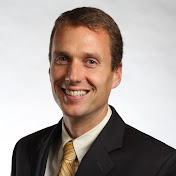
An Efficient Optimization under Uncertainty Framework for Static and Dynamic Sensor Placement with Real-world applications to Power Systems, Water Distribution Networks, and Air Pollution Monitoring. Due to environmental regulations continually reducing emission quantity allowed over time, there is a growing need for adaptable and feasible environmental monitoring, such as emission, water quality, and air pollution monitoring, for communities as well as process industries. Novel environmental monitoring technologies based on the Internet of Things (IoT) enable public and private entities to take a proactive approach toward the environment and asset integrity management. In addition to alternative emission monitoring, IoT can be easily integrated with dynamic sensing, a new monitoring technique that adjusts the locations of portable sensors in real-time to measure the dynamic changes in air and water quality. However, this calls for real-time optimization of spatiotemporal locations of sensors in the face of uncertainties like traffic in air pollution sensing, demand uncertainties in water distribution networks, or measurement uncertainties in power plants. In this talk, I present an efficient framework to solve these difficult problems using the BONUS (Better Optimization of Nonlinear Uncertain Systems) algorithm. Three real-world case studies ranging from optimal sensor placement in power systems to dynamic sensor placement for the city of Atlanta will be presented to illustrate the approach. Dr. Urmila Diwekar is president of the Stochastic Research Technologies LLC, and the Vishwamitra Research Institute (VRI, www.vri-custom.org), a non-profit research organization founded in 2004 to pursue multidisciplinary research. From 1991-2002 she was on the faculty of the Carnegie Mellon University. From 2002-2004, she was a Professor in the Departments of Chemical Engineering, Bio-Engineering, and Industrial Engineering, at the University of Illinois at Chicago (UIC). In chemical engineering, she has worked extensively in the areas of simulation, design, optimization, control, stochastic modeling, and synthesis of chemical processes. She is the author of more than 200 research papers, 7 books, and 15 chapters, and has given over 400 presentations and seminars. Her work has been cited 6700 times and she has an h-index of 44. Advised 46 graduate students and 15 post-docs. She is the AIChE 2022 CAST Division Computing Practice Award Winner and this presentation highlights her contributions.
Download
0 formatsNo download links available.