Edvard Munch
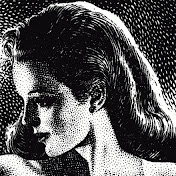
Edvard Munch (Norwegian pronunciation: [ˈmuŋk], 12 December 1863 -- 23 January 1944) was a Norwegian Symbolist painter, printmaker and an important forerunner of expressionist art. His best-known composition, The Scream, is part of a series The Frieze of Life, in which Munch explored the themes of love, fear, death, melancholia, and anxiety. Edvard Munch was born in a rustic farmhouse in the village of Ådalsbruk in Løten, Norway to Christian Munch, the son of a priest. Christian was a doctor and medical officer who married Laura Catherine Bjølstad, a woman half his age, in 1861. Edvard had an older sister, Johanne Sophie (born 1862), and three younger siblings: Peter Andreas (born 1865), Laura Catherine (born 1867), and Inger Marie (born 1868). Both Sophie and Edvard appear to have inherited their artistic talent from their mother. Edvard Munch was related to painter Jacob Munch (1776--1839) and historian Peter Andreas Munch (1810--1863). After numerous experiments, Munch concluded that the Impressionist idiom did not allow sufficient expression. He found it superficial and too akin to scientific experimentation. He felt a need to go deeper and explore situations brimming with emotional content and expressive energy. Under Jaeger's commandment that Munch should "write his life", meaning that Munch should explore his own emotional and psychological state, Munch began a period of reflection and self-examination, recording his thoughts in his "soul's diary".This deeper perspective helped move him to a new view of his art. He wrote that his painting The Sick Child (1886), based on his sister's death, was his first "soul painting", his first break from Impressionism. The painting received a negative response from critics and from his family, and caused another "violent outburst of moral indignation" from the community. Munch continued to employ a variety of brushstroke technique and color palettes throughout the 1880s and early 1890s as he struggled to define his style.His idiom continued to veer between naturalistic, as seen in Portrait of Hans Jæger, and impressionistic, as in Rue Lafayette. His Inger On the Beach (1889), which caused another storm of confusion and controversy, hints at the simplified forms, heavy outlines, sharp contrasts, and emotional content of his mature style to come.He began to carefully calculate his compositions to create tension and emotion. While stylistically influenced by the Post-Impressionists, what evolved was a subject matter which was symbolist in content, depicting a state of mind rather than an external reality. In 1889, Munch presented his first one-man show of nearly all his works to date. The recognition it received led to a two-year state scholarship to study in Paris under French painter Léon Bonnat. When Munch died, he bequeathed his remaining works to the city of Oslo, which built the Munch Museum at Tøyen (it opened in 1963). The museum hosts a collection of approximately 1,100 paintings, 4,500 drawings, and 18,000 prints, the broadest collection of his works in the world.The Munch Museum currently serves at Munch's official Estate and has been active in responding to copyright infringements, as well as clearing copyright for the work, such as the appearance of Munch's The Scream in a 2006 M&M advertisement campaign.The U.S. copyright representative for the Munch Museum and the Estate of Edvard Munch is the Artists Rights Society. [from Wikipedia] Music by Robert Rich & Steve Roach.
Download
0 formatsNo download links available.